Torsion springs store enough energy to break bones if a winding bar slips. You also need the exact spring size for your door’s weight and height, the right winding bars, and the know-how to balance the door afterward. Most garage door repairs are fine to DIY. Springs are the exception.
We are big fans of homeowners doing their own maintenance. Lubricating rollers, cleaning sensors and swapping remote batteries are all easy wins. Spring replacement is where we draw the line, and here is why.
The energy in a wound spring
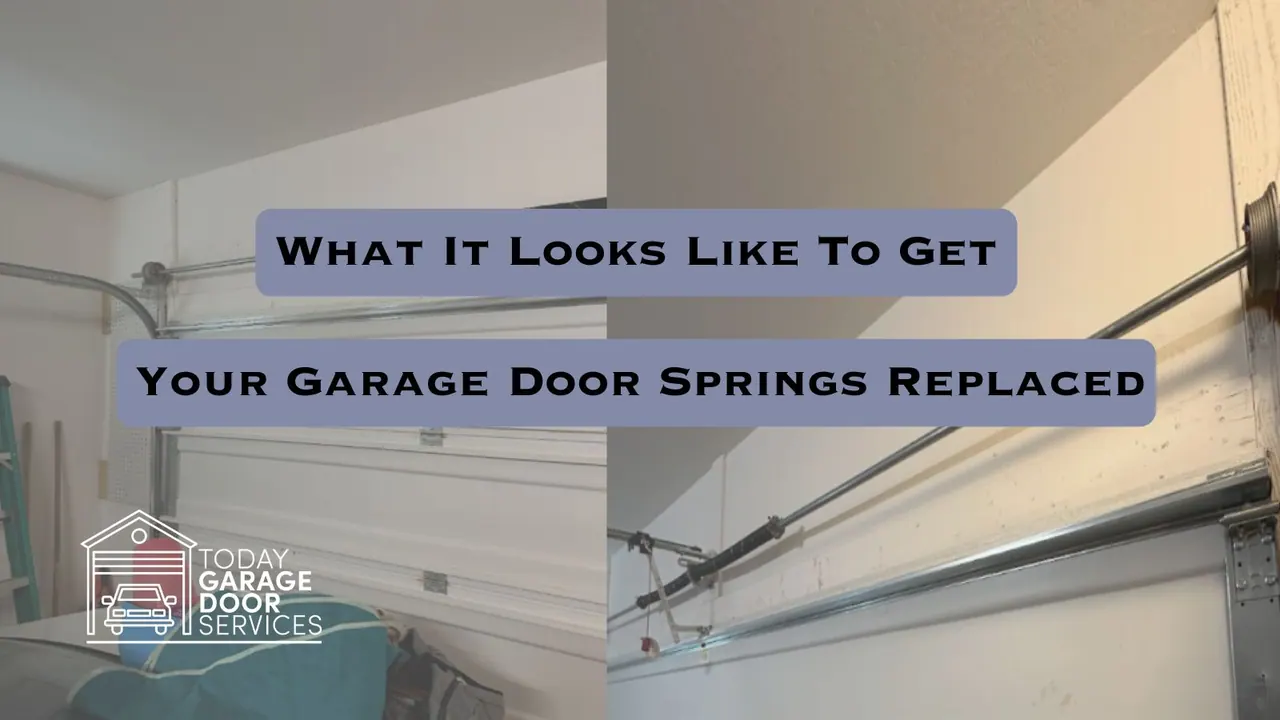
When a door is closed, its torsion spring is wound many turns, holding enough force to lift the entire door. To replace it, you have to unwind the old spring and wind the new one by hand, a quarter turn at a time, using steel bars in a winding cone.
If a bar slips out, or you use the wrong tool (screwdrivers are a classic mistake), the cone spins and the bar becomes a projectile. Hand, wrist and face injuries from DIY spring work are well documented.
The parts have to match your door
Springs are not one size fits all. The right spring depends on:
- The door’s weight.
- Its height.
- Drum size.
- Wire size, inside diameter and length of the spring.
- Whether you have one spring or two.
Buy a spring that is too weak and the door is heavy and strains the opener. Too strong and the door flies up and won’t stay closed. Either way, other parts wear out faster.
Balance is the real skill
A good spring job ends with a door that lifts with light effort and stays put when you let go halfway. Getting there means adjusting turns, checking cable tension on both drums and testing travel. Our balance test guide shows what a balanced door feels like.
What a pro checks while they are there
When we replace a spring, we also look at:
- Cables for fraying, especially at the bottom brackets.
- Drums and the center bearing plate.
- Rollers and hinges.
- The opener’s force and travel settings.
- The auto-reverse safety test.
A spring that broke early is often a symptom. Catching the cause saves you a second visit.
Extension springs too
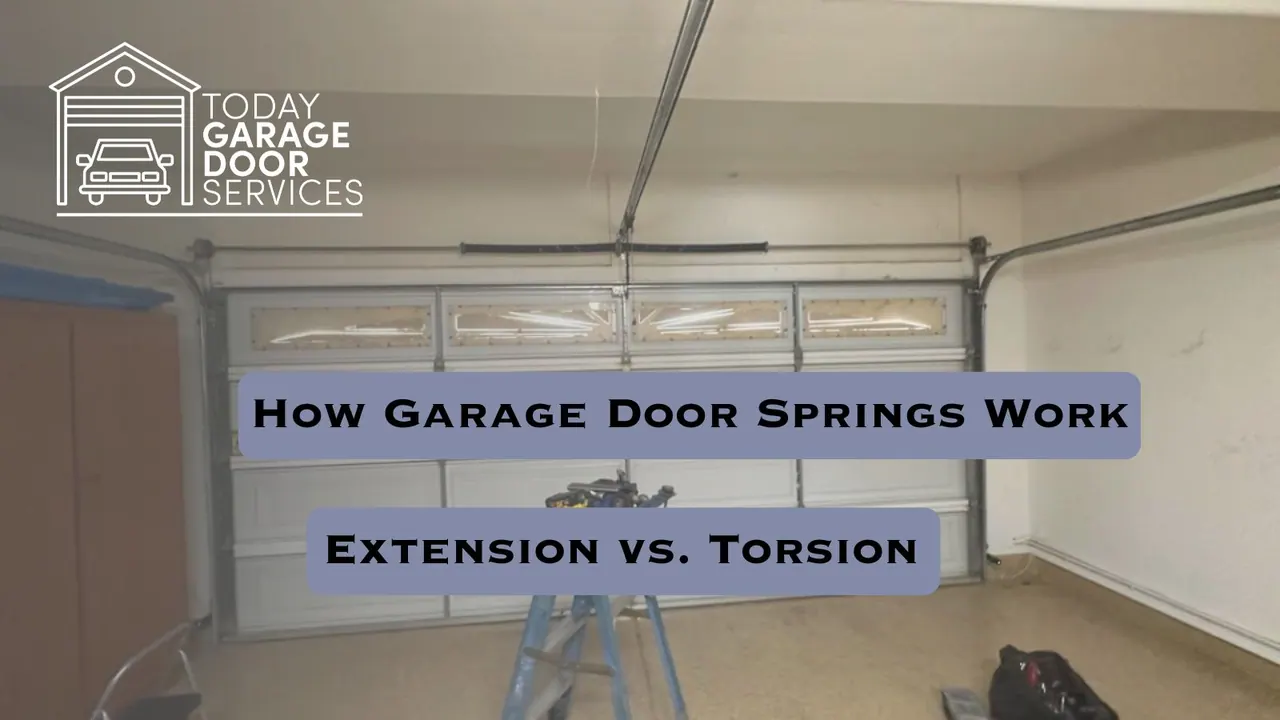
Extension springs along the tracks look simpler, but they are fully stretched when the door is down. Every extension spring needs a safety cable through the center so a break can’t whip across the garage. We explain the difference in torsion vs. extension springs.
What you can do safely
- Take a clear photo of the spring and text it to us.
- Leave the door closed and the opener unplugged.
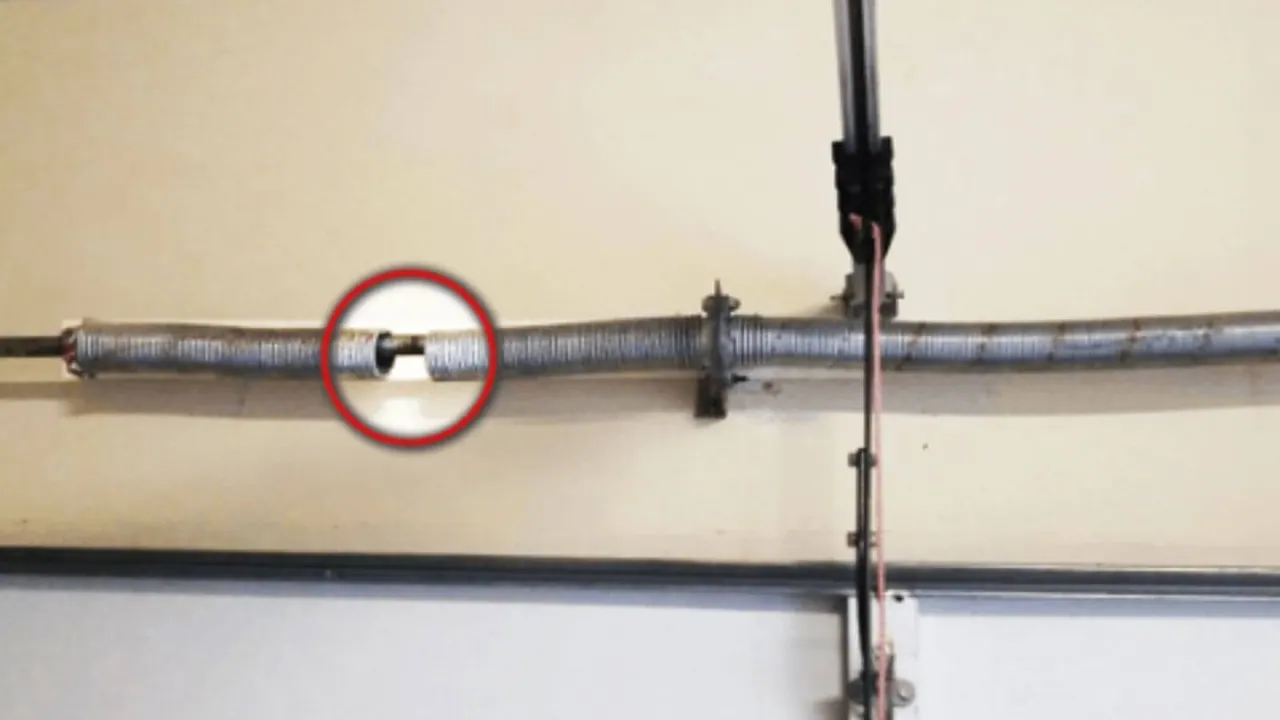
- Read up on the signs of a broken spring so you know what to expect.
Tempe has a lot of rentals and student homes, and we see plenty of DIY spring jobs that need redoing. We handle spring replacement across South Tempe, Warner Ranch, Lakeshore and the rest of Tempe, usually the same day. You get the exact price before work starts. More on our garage door repair page.