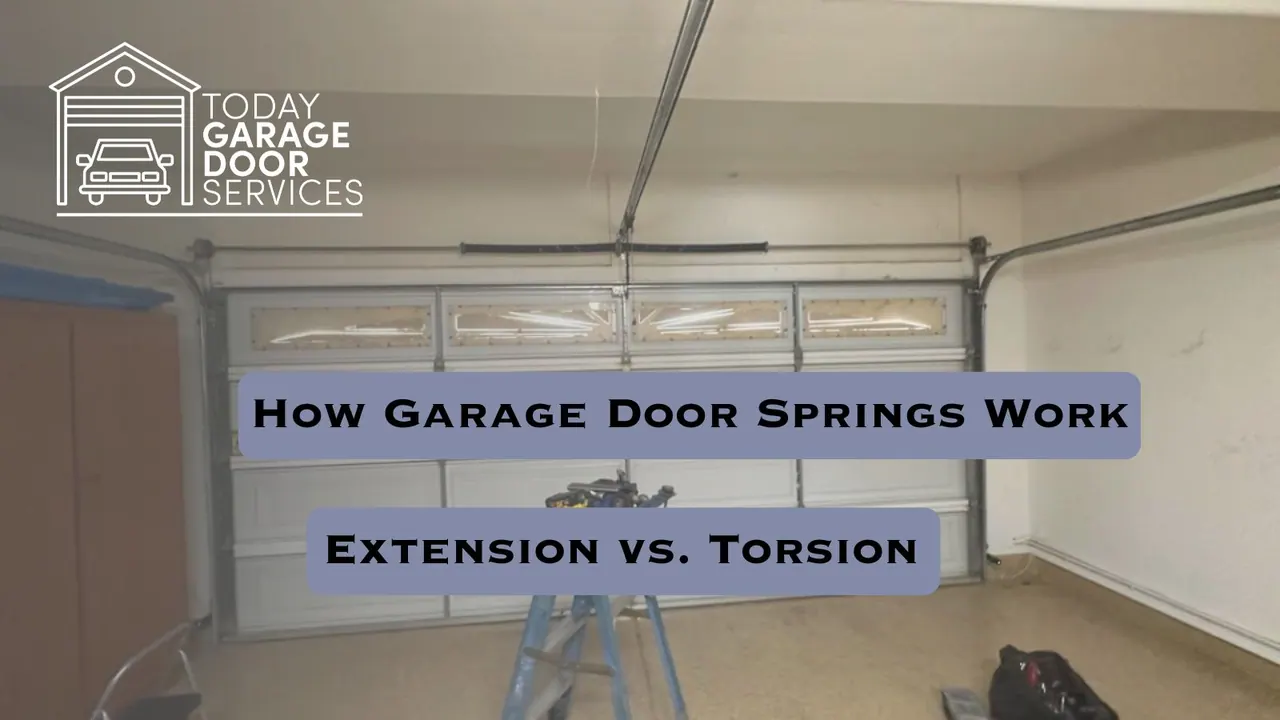
Torsion springs mount on a bar above the door and twist to lift it. Extension springs run along the horizontal tracks and stretch. Torsion systems are smoother, easier to balance and generally last longer. Extension springs are common on older homes and need safety cables so a broken spring can’t whip around the garage.
There are two main types of garage door spring, and knowing which one you have makes it much easier to understand what went wrong and what a repair involves. In Mesa we see both, because the city has everything from 1970s ranch houses to brand-new builds in Eastmark.
Torsion springs
A torsion spring is a heavy coil mounted on a steel shaft right above the closed door. When the door closes, the spring winds up. When it opens, the spring unwinds and turns the shaft, which turns cable drums at each end and lifts the door.
Where you see them: most newer homes in the Phoenix metro, and most replacement doors installed today.
Pros
- Smooth, controlled lift.
- The door balances well and stays put when stopped halfway.
- Generally longer cycle ratings than basic extension springs.
- When a torsion spring breaks, it stays on its shaft.
Cons
- Winding them requires proper bars and training. They are under a lot of tension.
Some doors use an enclosed variation where the spring sits inside the tube. Wayne Dalton TorqueMaster systems are a common example and need their own parts and process.
Extension springs
Extension springs run parallel to the horizontal tracks on each side of the door, above your head. They stretch when the door closes and pull when it opens, using cables and pulleys.
Where you see them: older homes, lighter single doors, and some budget installs.
Pros
- Lower parts cost up front.
- Work in garages with limited headroom.
Cons
- Jerkier motion and more wear on pulleys and cables.
- Each side is separate, so they can fall out of balance and make the door crooked.
- If one breaks without a safety cable through it, it can whip across the garage. Every extension spring should have a safety cable.
How to tell which one you have
Close the door and look up. A coil on a bar above the door is torsion. Springs running along the tracks toward the back of the garage are extension.
Should you switch to torsion?
Many older Mesa homes still have extension springs. If yours keep breaking, the door bounces, or the pulleys are worn, converting to a torsion system is often worth it. It is a bigger job than a straight spring swap, so we will price both options and let you choose. Read more about the lifespan of garage door springs in Arizona.
Either way, don’t DIY the spring
Both types store enough energy to injure you. Torsion springs in particular need winding bars and the right technique. We explain why spring work is a job for a pro.
We repair and replace both spring types across Dobson Ranch, Las Sendas, Red Mountain and the rest of Mesa. Text a photo of your springs and we will tell you which type you have and the exact price before we start. More on our garage door repair page.